

Good Cry
What I enjoyed in December

Books
I’ve often talked about how difficult I’ve found fiction for the past decade or so, particularly novels, and that’s largely still true today. For one thing, novels typically aspire to grandiosity of some sort or another, which has made them difficult insofar as I want to turn to reading for relief from my work (which also involves reading we might describe as “heavy”). For another, something about the novelistic conceit to weigh in regarding some facet of the human condition has seemed to me, in the books I might peruse while wandering shelves, too caught up in the conditions of our particular moment, as if relying on an incisive rendering of our idiotic culture for world building.
A few years ago now I found that a solution to this problem was to return to the source of my initial enthusiasm: what got me hooked on reading as a kid were books like Goosebumps and Spooksville, His Dark Materials or Redwall, the variously fantasy-based, sometimes pulpy, often supernatural stuff that appealed to my inchoate sense of romance. I had left that stuff well behind, probably around the time that my friend Aaron loaned me some Lorca poems and I realized it was important to develop a more sophisticated and well-rounded reading habit.
But post 2020, I and many of my friends have found it increasingly affirming to carve out some time for what we might uncharitably call a kind of regression, a cocooning that puts us in touch with more tender and inexperienced versions of ourselves, versions that felt safe and held in the arms fantasy. It felt good, in other words, to read the The Book of Dust as a 30-something and to realize that something in myself still resonated with that kind of work, no matter how different I may be. Surely, there were newer works of fantasy worth beginning a relationship with.
But as it turns out, this newer version of myself also yearns for good writing; cognizant of pressures on my time, my tolerance for bad or even flat prose is next to nothing. I don’t have time to care if I’m being judgmental or presumptuous, but the result is that I just haven’t found a lot of books lately that sit in that fragile zone, books that are both escapist and deeply well-done at once. This is perhaps an idiosyncratic problem, but maybe you have some version of it, too. Of course, there’s the necessary caveat that said problem is one only because I don’t have more time to go looking—the books are out there! I just don’t know about them. Here’s a case in point that recently knocked me out:
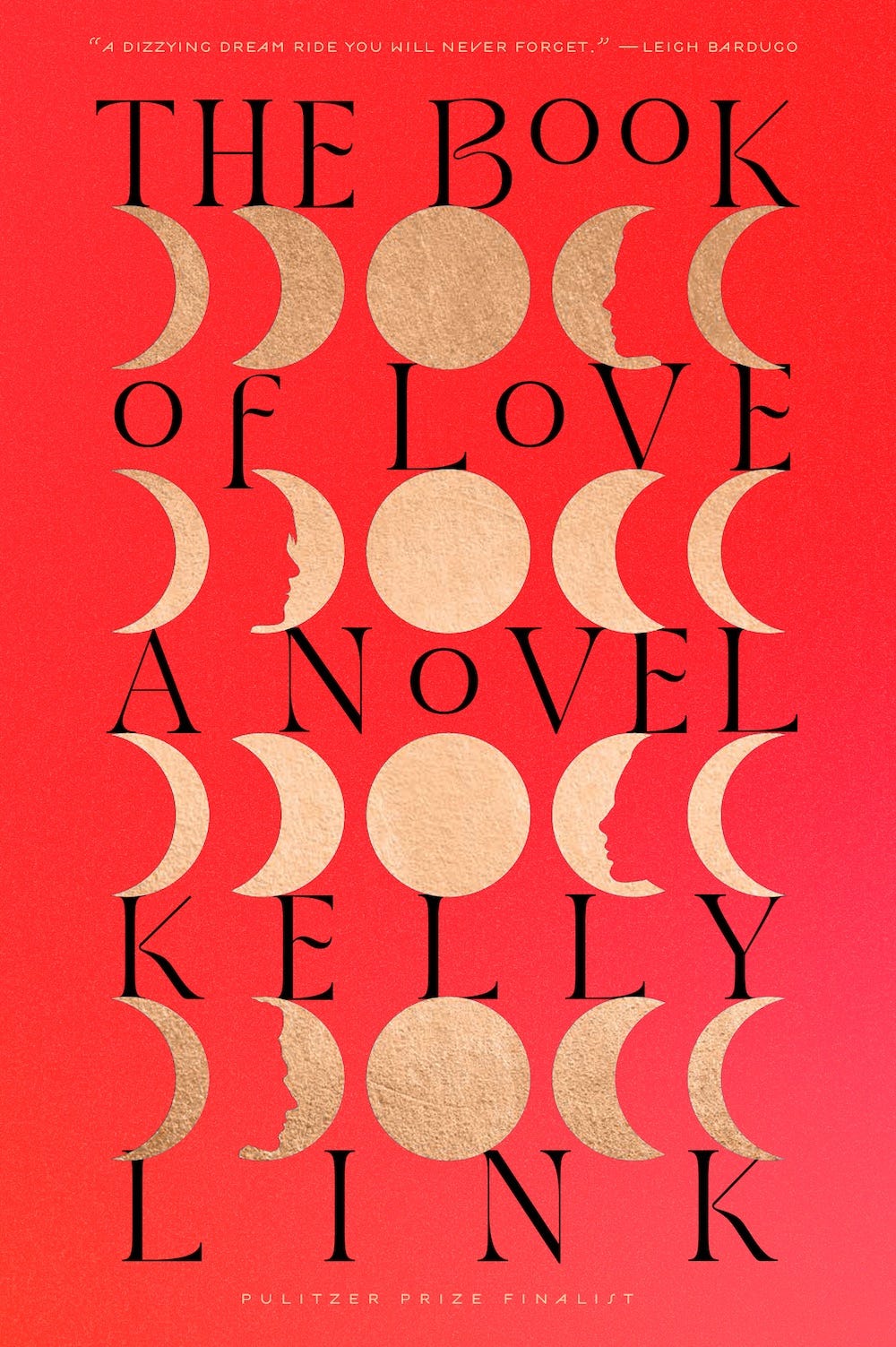
I loved this utterly weird, ambitious, and magical book for so many reasons, many of which have to do with the particular way that Link holds together contradictions: the fantastical events of the plot, if spelled out here, would belie the character development, for example, but I almost hesitate to tell you how seriously that work is taken lest you lose a sense for how it sits on the page, which is to say lightly. In other words, I didn’t expect a book with such profound interior meditations to also include a vengeful goddess who sometimes turns people into animals; poignant and tragic events are counterposed with quotidian matters like sibling rivalries and neighborhood bars, never treated as pat or simple. Music, too, is present throughout, threaded with a delicate hand mostly through details and observations that indicate something deep in Link’s own life experience.1
The book is funny, tender, sharp, and (yes) entertaining in equal measure, brave in how long it commits to keeping readers confused about what the hell is actually going on. (I have often said that being confused is my favorite aesthetic experience, a pretty solid indicator that I’m going to love and remember whatever it is that might eventually emerge through the noise.) Though the presence of magic complicates everything going on in the story, the story itself is basically about a group of friends. In that way, it brought me back to what I loved about Spooksville, for example, which was the dynamic of a crew, a handful of misfits who build community, compliment each other’s weaknesses, fight on occasion, and grow together.
And though Link’s unapologetic love for romance comes through here, it does not turn this book into a romance in the sense of genre; there are no tropes to speak of, no gender-normative love plots, damsels in any situation, tough/mysterious bad boys, or whatever sometimes pleasurable pablum that too often puts me off of the “romantasy” thing that I nevertheless recognize isn’t monolithic. Instead, these characters act like real people, the kind of people I know, who try to take care of one another even as they may get in their own way, act on impulse, say the wrong thing. Link’s ear for human connection infuses all the violence and the heartbreak of her epic with a kind of earnest worldview, a guiding, imperfect, and often failing memory of love’s capacity for transformation.
Records
I don’t know anything about ear except that their record The Most Dear and The Future combines Postal Service melodic/harmonic moves with the more glitched-out intrusions of a band like Jockstrap. Lots of what makes this surprising has to do with timbre, the particular kind of low-end synth that bursts through the door on Ceremony, for example. Lots of what makes it comforting is its sentimentality, a weary but vivid melancholy.
I think about being seventeen in the passenger seat of my best friend’s car, window down long after the sun had vanished, listening to Give Up and feeling the full length of our suburban kingdom unrolled in front of us. The sadness of that record worked because teenagers are melodramatic and because we knew even then, I think, that the feeling of being on top looking down was temporary, thin as any bubble and headed the same way.
On the other side of the affective spectrum, The Aces’ Gold Star Baby is all sexy confidence, a queer disco/funk sensibility undergirding pop hooks that always have something interesting about them. For me, that’s often got to do with the harmonies that sometimes remind me of Michelle.
Finally, High Heart, the 7th album from Japanese indie pop band Plastic Girl In Closet, is a crush of low-fi romance, the kind of dizzying and cinematic swell that has become so characteristic of the genre once it got routed through Japan’s nostalgia machine. If you can read and listen at the same time, this would be a great one for The Book of Love.
cry hard.
Link has an essay in NPR’s How Women Made Music, which I haven’t read but is on my shelf for soon.
I can’t tell if the Locked Tomb series (Gideon the Ninth is the notable first, Harrow the Ninth makes a weird but ultimately really rewarding departure) would scratch the itch for you. Sort of sci-fi sort of horror sort of fantasy, very queer, Gideon has a bit of a Joss Whedon hyper verbal banter (maybe Firefly energy?) your mileage may vary and they’re hefty books but I’m devouring them and as an unrepentant snob who barely read genre before this year they stand out to get this sort of recommendation. I am adding this Link to my list!
I'm not familiar with any of these musicians you mention, but you write about them so well that I'm itching to listen to them.
Also love the write-up on Kelly Link. I've only ever had her first two collections. So happy she has more work out but a little frustrated that it's not a good time for me to pick up copies. For now, I'll probably reread the two I own! Love her work so much.