

Good Cry
What I enjoyed in February

Longtime readers will know that I love me a lil pop conference recap, and I’ve just returned from my favorite. This post will largely (but not exclusively!) be about the great papers that I heard at IASPM (US) this year, with some good music recs at the bottom (there’s been a lot of good stuff recently).
IASPM was in DC this year, utterly surreal and dystopian even before we started bombing Iran. We are all breaking under the strain of unsustainable atrocities. I don’t know how to talk about what’s also good and lucky without seeming glib or ignorant of the world. Having never flown to the city before, I was shocked and delighted by its efficient rail system. I had precious, beautiful meals with old and newer friends. The cognitive dissonance is becoming too much to sustain. The world does seem to be ending. While we all go to work anyway, I am grateful for my students and communities.
.
IASPM
Carolyn Malachi presented on lullabies as an “ontological infrastructure” using her own music as an example. While recording artists are resentful of the increasing pressure to record in Dolby Atmos (a sort of 3-D sound system), the atmospheric effects in can achieve have potential for helping artists explore lullabies that might trigger sympathetic nervous system responses in listeners. From newborns trying to sleep to veterans with PTSD, Malachi is interested in lullaby’s potential as “sonic practices that stabilize our being.”
In the same session, Genevieve Allotey-Pappoe presented material from her fieldwork in Spain, showing how Black musical genres (primarily from the US and Caribbean) are taken up by marginalized communities, especially in traditionally separatist regions like Catalonia. “A means to embody marginality,” Black music is used to signify struggles against any number of foes, from capitalism and patriarchy to the Spanish government or dominance of the official Spanish dialect. This makes sense to a degree, and is often emancipatory for listeners looking to struggle in community. But it also raises complex issues when the word “slavery” for example is taken as a metonym rather than a literal condition.
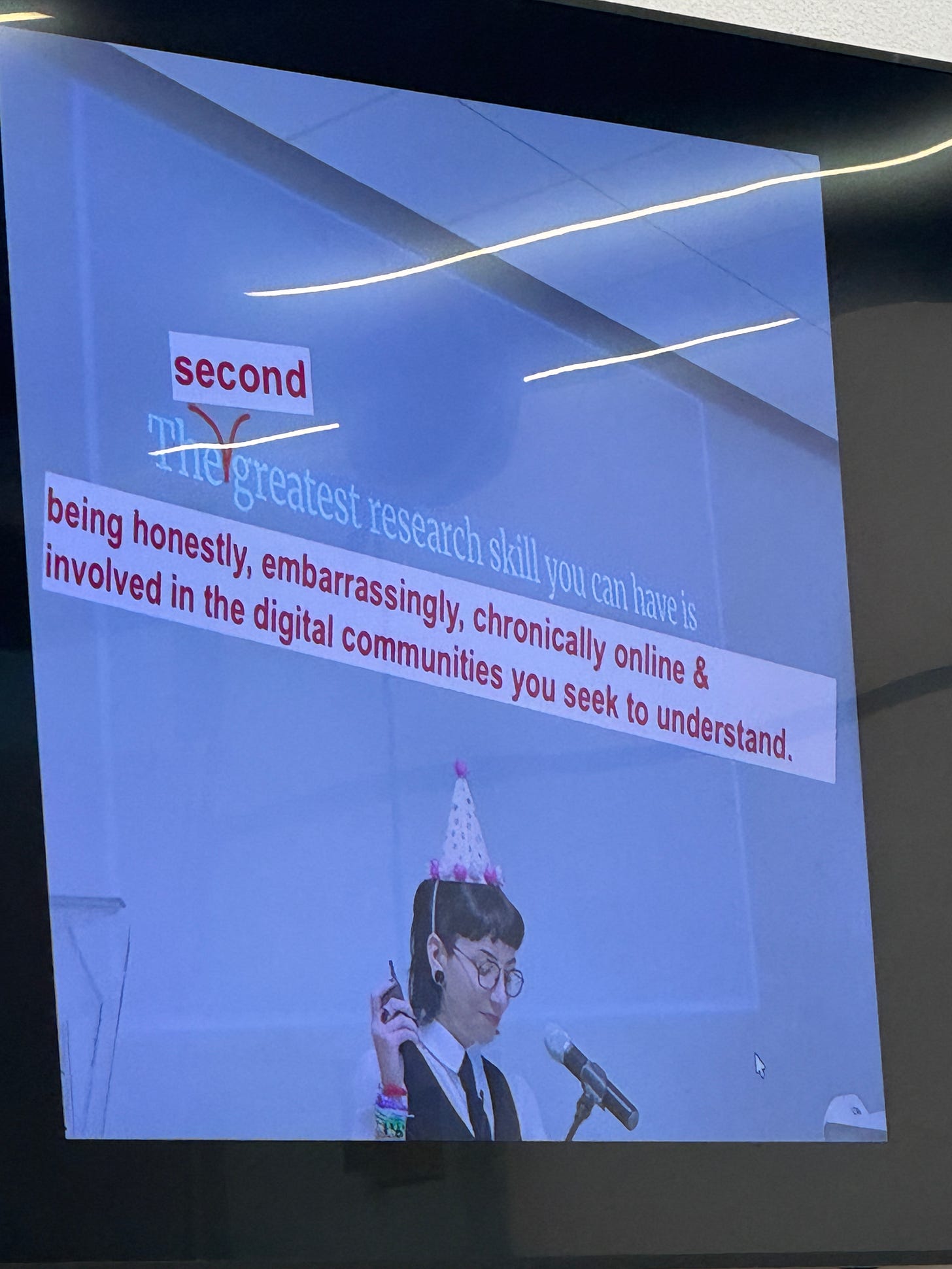
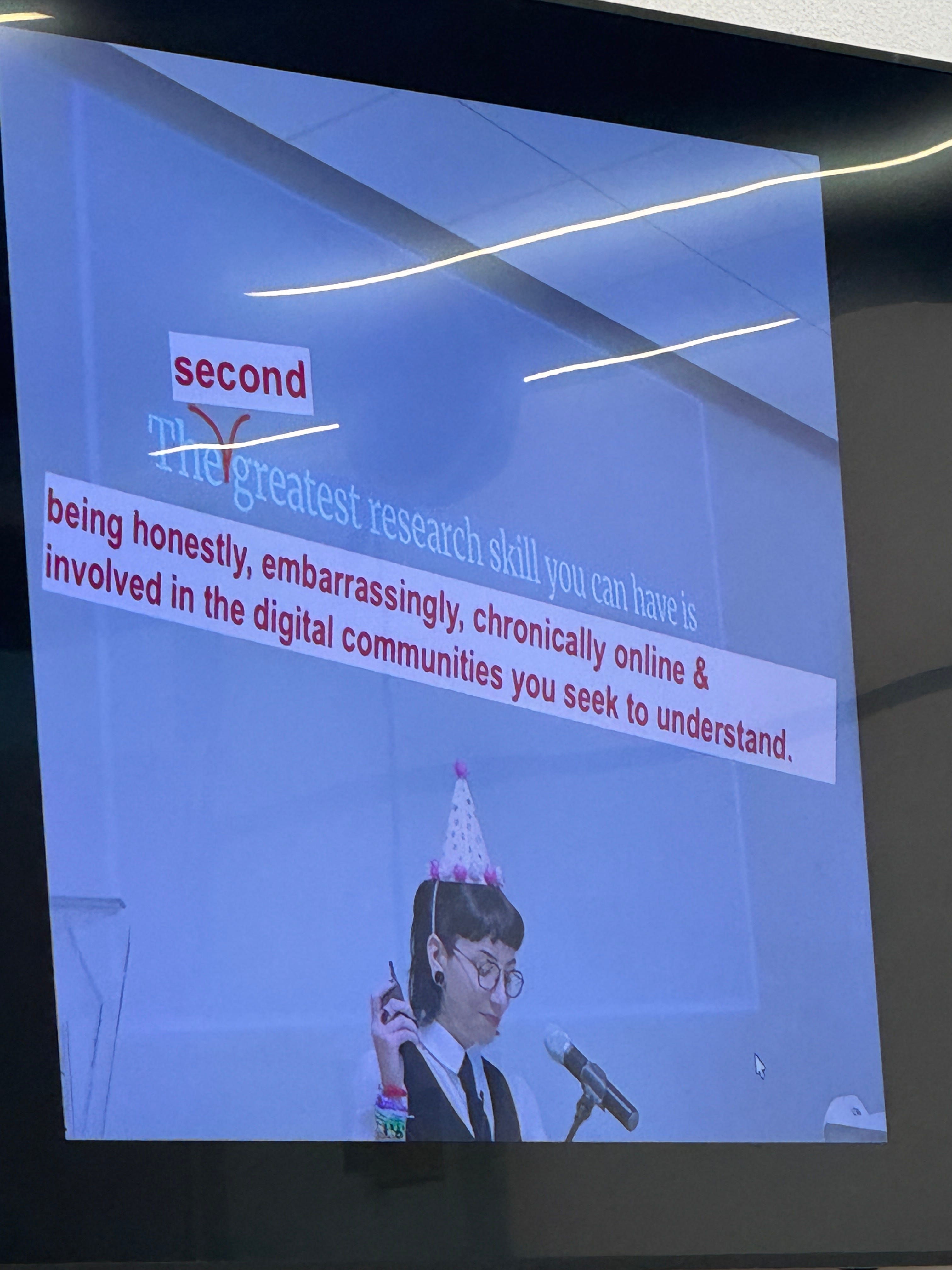
Kate Hamori’s presentation theorized TikTok’s “sound pages” as an archive for scholars examining the proliferation of messages and sentiments on the internet, which encourages us to think of social media companies archivists controlling important collections of information. This makes it especially troubling when practices of “visibility moderation” seemingly disappear whole moments, trends, or topics as if they had never existed in the first place. Scholars have already shown that moderation practices promote “attractive” videos and suppress others. But one remix of the song “bella ciao” was seemingly scrubbed in its entirety from TikTok’s sound pages because one of the bullet casings used in Charlie Kirk’s murder weirdly invoked its lyrics. “Sound pages” show a collection of videos that are unified by the same song selection, collecting every instance where a user soundtracked their video in the same way; this archive is helpful for understanding how people are using music to make sense of current events and shape narratives about them. TikTok’s wholesale suppression of a controversial association—during a critical time in the election cycle, no less—continues to foreground their disproportionate power to shape media narratives.
_
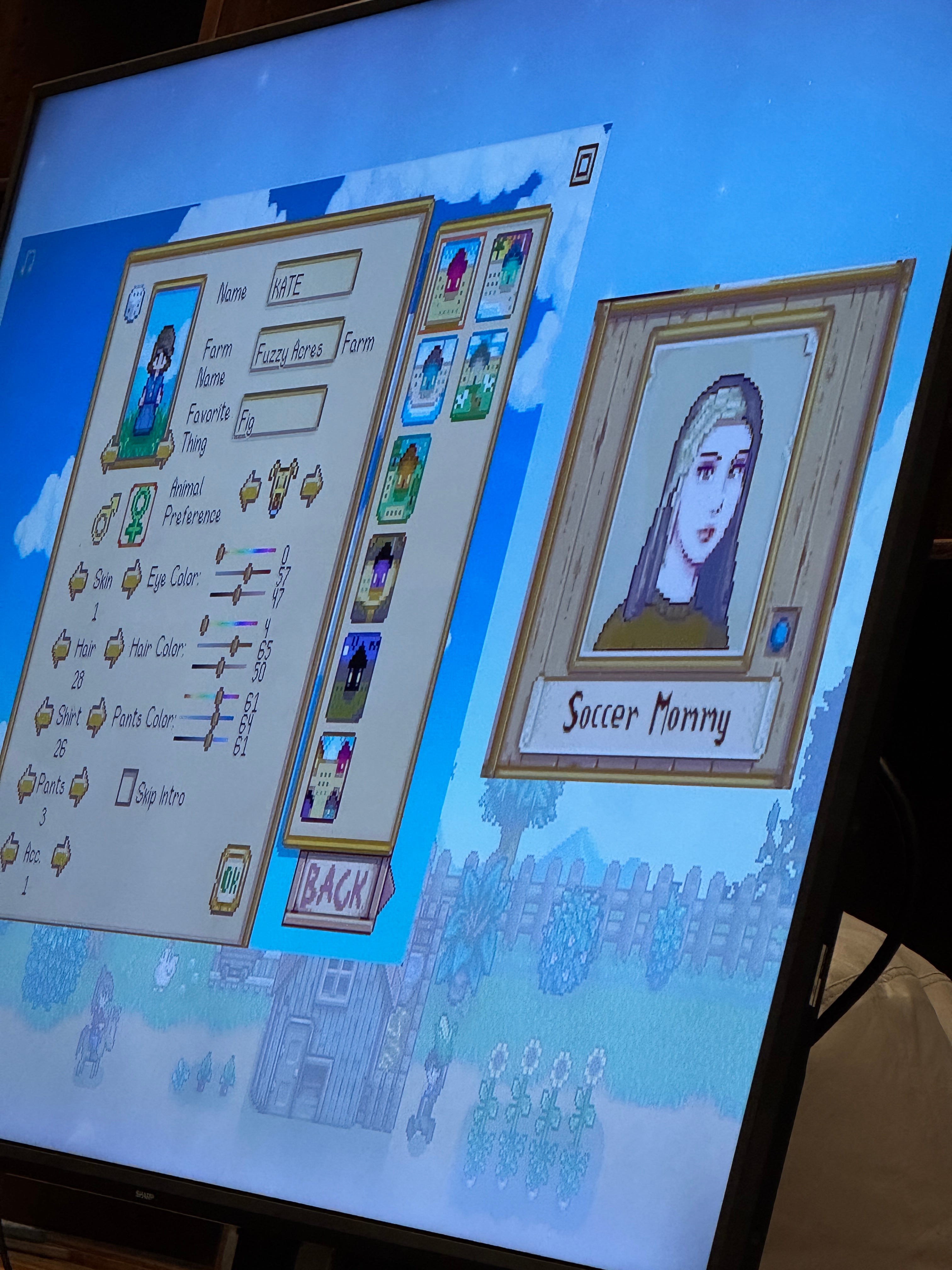
I was delighted to hear Kate Galloway’s paper on Soccer Mommy’s character in Stardew Valley, and despite the Q&A’s well-taken knocks on the game’s heteronormative telos, this session might just be what gets me to ultimately try it out. Kate talked about the gameplay’s prioritization of “repetition and low-stakes intimacy,” a type of therapeutic refuge that resonates with queer fans in ways that I took to be similar to the soft femme approach of much of the indie rock that Soccer Mommy represents. Stardew Valley, among other things, “instantiates a world where care happens through relational timespaces rather than narratives,” and in that queers storytelling.
Paula Harper’s paper discussed “platform effects,” showing how the affordances of a given social media format result in changes to the actual form/length/content of the media that we are consuming. In part, one thing that happens here is that indie content creators have to swim “upstream,” worrying about how the distribution of their material through huge social media companies naturally works against their DIY credibility (yet facilitates having a career at all given the constraints of our media ecosystem).
Jacob Kopcienski presented on hyper-local critiques of municipal politics that drag artists are staging across Appalachia, where they create queer spaces in and through rural contexts rather than against or outside. How this happens breaks down into at least three categories (from fully public events to fully private ones, as well as those that take time to sort of clear out the normies in advance) and contributes to Kopcienski’s larger project by demonstrating how queer people and queer musical practices embrace and engage their Appalachian homes, in contrast to persistent stereotypes. (And we’ll be talking more about this on the pod soon.)
Finally, I attended a roundtable discussion with Ajitpaul Mangat, Dana Gorzelany-Mostak, Paz Regueiro, Justin Patch, and Lauron Kehrer about the many ways that music factored in the 2024 Harris campaign. This was a lively discussion in which I asked an incoherent question (it was very early); but more than anything, I loved Paz’s paper, which put words to a vague feeling that I’ve had and even tried to write about: that the “Kamala is brat” memes were more about laughing at her campaign rather than with her, that the campaign’s desperation to grab for cultural relevance and to be seen as “hip” or “with it” superseded the very policy priorities that would have ironically actually mattered to the young voters that Harris imagined she was winning.
Music
My god there has been so much. Who the fuck is sean trelford?? How do they have any business sounding this good? I’m still searching for a good phrase to encapsulate the approach that appears on the first track, “i should have known,” which I also hear in Andy Shauf and Bruno Pernadas, which has to do with a kind of vintage tinge and chords that slide in more diminished shapes to connect major moments. It’s gorgeous and shimmering, a sheen of microphone haze and distorted, clipping drums. Listen to the sweeping romance of “naked”! The heartbreak and pathos in equal measure! What are we doing here???
Nobody told me about Water from your Eyes and what I want to say about that is that I’ve got some. I truly don’t understand how two young people have already (and have already been) exploring such a range of moods at such a high level. “Nights in Armor” spins with that kind of buoyant existentialism I associate with being young and realizing how big the world is. “Born 2” churns with more classically grungy/shoegazy angst. “Life Signs” switches things up, like three songs in one.
OH YEAH, christ, I can’t believe I haven’t posted about Hana Eid yet. The absolute standout Big Feelings record of my winter, utterly gorgeous and technically scintillating. Opening track does what perfect opening tracks do: encapsulate and preview the soul of the entire record. Eid’s voice sometimes reminds me of Daffo, and I think they should tour together.
c r y h a r d